
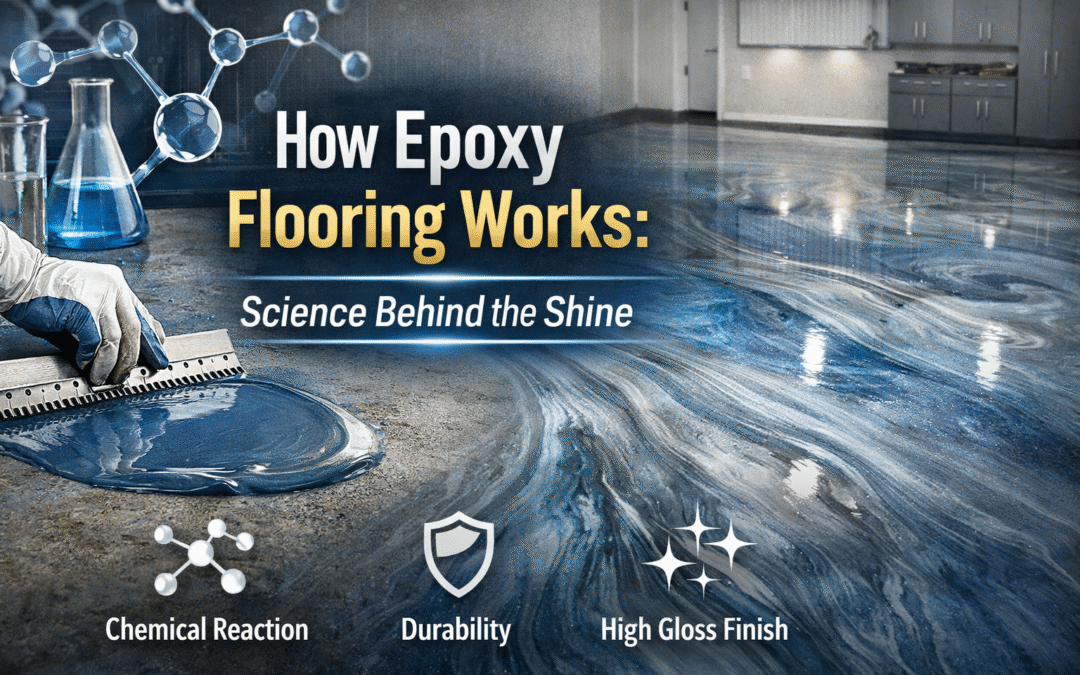
Epoxy flooring has become one of the most popular flooring options for both residential and commercial spaces in Canada. Its durability, high-gloss finish, and customizable appearance make it a favorite among homeowners, contractors, and business owners. But what exactly makes epoxy flooring so special? In this article, we’ll explore the science behind epoxy flooring and why it creates that signature shine.
What is Epoxy Flooring?
Epoxy flooring is a type of coating applied over concrete surfaces. It is made from a combination of resin and hardener, which, when mixed, undergo a chemical reaction called polymerization. This reaction transforms the liquid mixture into a solid, durable, and seamless surface.
Unlike traditional flooring options such as tiles or vinyl, epoxy creates a monolithic layer—meaning it is continuous and without joints. This feature makes it highly resistant to cracking, staining, and wear.
The Chemistry of Epoxy
The magic behind epoxy flooring lies in its chemical structure. Epoxy is a thermosetting polymer, which means once it cures, it cannot be melted or reshaped. Here’s a simplified explanation of the process:
-
Mixing Resin and Hardener – Epoxy comes in two parts: the resin (base) and the hardener (activator). When combined, the molecules begin to link together.
-
Polymerization – This chemical reaction forms a tightly bonded network of molecules, creating a strong, dense material.
-
Curing – Over several hours or days, the epoxy hardens completely, forming a tough, glossy surface that can handle heavy loads and high foot traffic.
The shine of epoxy floors is a natural result of the chemical composition. The dense polymer network reflects light evenly, giving the surface a smooth and glossy finish. Metallic epoxy flooring, which includes mica or metallic pigments, enhances this effect to create a three-dimensional, flowing look.
Layers of Epoxy Flooring
Epoxy flooring is not just a single layer. Most installations include multiple layers, each serving a specific purpose:
-
Primer Layer – Applied directly onto the concrete, the primer ensures strong adhesion and prevents bubbles from forming.
-
Base Coat – This layer provides the color and opacity for the floor.
-
Decorative Layer – Optional for metallic or patterned floors. This layer can include flakes, metallic pigments, or custom designs.
-
Top Coat (Sealant) – The final layer adds gloss, UV resistance, and protection from abrasion and chemicals.
Each layer contributes to the durability, aesthetics, and longevity of epoxy flooring.
Why Epoxy Flooring is Durable
The durability of epoxy flooring comes from both its chemical properties and physical structure:
-
High Compressive Strength – Epoxy can withstand heavy machinery, furniture, and foot traffic without cracking.
-
Chemical Resistance – It resists damage from household cleaners, oils, and chemicals, making it ideal for garages and industrial spaces.
-
Moisture Resistance – Epoxy forms a waterproof barrier that protects concrete from water damage and mold growth.
In Canadian climates, where winters can bring snow, ice, and salt into homes, epoxy flooring’s moisture resistance makes it especially practical.
Heat, Light, and Longevity
Epoxy is naturally resistant to heat and UV light, but extended exposure to sunlight can cause some types to yellow over time. High-quality epoxy products include UV stabilizers to prevent discoloration. When properly installed and maintained, epoxy floors can last 10–20 years or more, making them a cost-effective long-term investment.
Maintenance: Keeping the Shine Alive
Maintaining epoxy flooring is surprisingly simple, thanks to its smooth, non-porous surface:
-
Regular Cleaning – Sweep or vacuum dust and dirt.
-
Mopping – Use a soft mop with water or mild detergents. Avoid harsh chemicals.
-
Protective Measures – Use furniture pads to prevent scratches.
Unlike other flooring types, epoxy rarely requires refinishing. The shine you see after installation can last for years with minimal care.
Conclusion
The science behind epoxy flooring combines chemistry, engineering, and design to create a surface that is not only beautiful but also highly functional. From its polymerization process to its multi-layer structure, epoxy flooring offers strength, durability, and a signature high-gloss finish that transforms ordinary concrete into a statement floor.
Whether you are a Canadian homeowner looking to upgrade your garage, a business owner seeking a low-maintenance commercial floor, or a designer exploring creative flooring solutions, understanding how epoxy works can help you make informed decisions.
Epoxy flooring is more than just a shiny surface—it’s a blend of science and style designed to last decades.